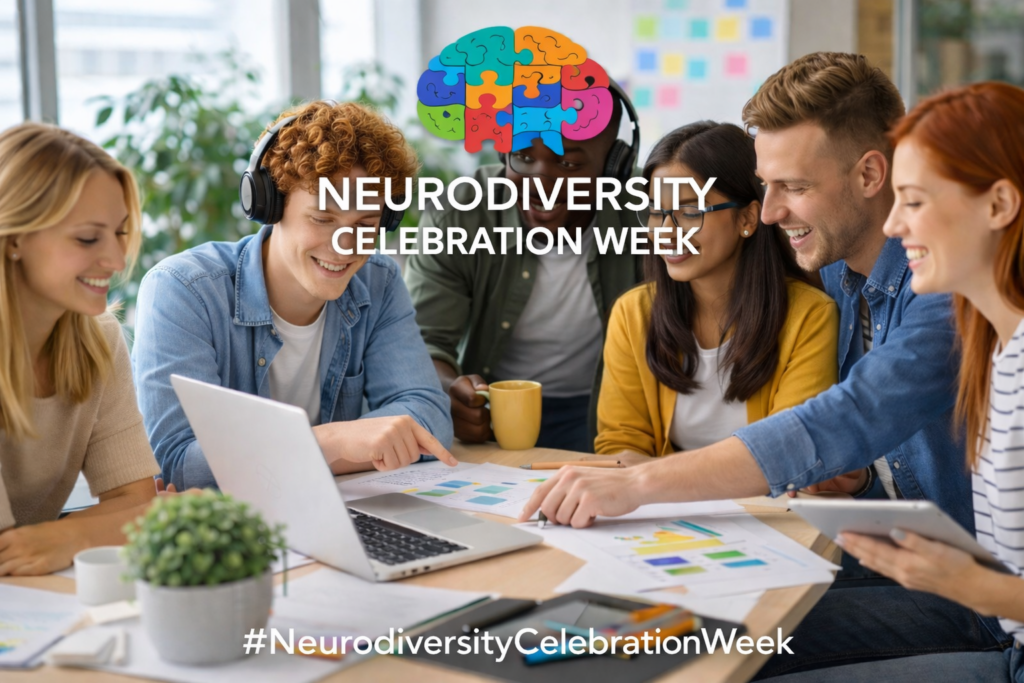

On World Autism Awareness Day, organisations around the world take a moment to recognise and reflect. But awareness alone is no longer enough.
The conversation is shifting—from simply understanding autism to actively creating environments where autistic individuals can succeed, contribute, and lead.
At Intersect Global, we believe this is not just a social responsibility. It’s a strategic opportunity.
Understanding Autism in the Workplace
Autism Spectrum Disorder (ASD) is a spectrum—meaning experiences, strengths, and challenges vary widely from person to person.
Many autistic individuals bring exceptional abilities to the workplace, including:
- Deep focus and attention to detail
- Strong analytical and problem-solving skills
- Pattern recognition and systems thinking
- High levels of integrity and consistency
Yet too often, traditional hiring processes and workplace norms unintentionally exclude this talent.
The Barriers That Still Exist
Despite growing awareness, significant challenges remain:
- Rigid hiring processes that prioritise social performance over capability
- Unstructured environments that create sensory overload
- Communication styles that favour ambiguity over clarity
- Lack of manager training to support neurodiverse teams
These barriers don’t reflect a lack of ability—they reflect a lack of adaptation.
Why Inclusion Is a Business Imperative
Organisations that actively include autistic talent gain more than diversity—they gain a competitive edge.
Research consistently shows that neurodiverse teams:
- Solve complex problems faster
- Bring fresh perspectives to innovation
- Improve overall team performance
In a world where differentiation matters, thinking differently is an advantage.
Moving from Awareness to Action
So what does meaningful inclusion look like in practice?
1. Rethinking Hiring
- Offer alternatives to traditional interviews
- Focus on skills-based assessments
- Provide clear expectations and structured processes
2. Designing Inclusive Environments
- Create quiet spaces or flexible working options
- Reduce unnecessary sensory distractions
- Allow for different communication preferences
3. Equipping Leaders
- Train managers to understand neurodiversity
- Encourage clarity, consistency, and direct communication
- Foster psychological safety within teams
4. Embedding Inclusion into Strategy
Inclusion should not sit within HR alone—it should be part of how organisations operate, grow, and innovate.
The Role of Leadership
Real change happens when leadership moves beyond intent and into accountability.
Leaders set the tone for:
- How differences are perceived
- How support is provided
- How success is defined
The question is no longer “Are we inclusive?”
It’s “Are we creating conditions where everyone can perform at their best?”
A Call to Action
World Autism Awareness Day is an opportunity but it’s also a challenge.
To rethink outdated systems.
To remove unnecessary barriers.
To recognise that talent does not look, think, or communicate in just one way.
At Intersect Global, we see the future of work as one that embraces difference not as an exception, but as a standard.
Because when organisations create space for diverse ways of thinking,
they don’t just become more inclusive—
they become better businesses.