Intersect Global | Pride MonthBeyond Visibility: Building Truly Inclusive Workplaces

Every June, organisations around the world celebrate Pride Month—a time to recognise the LGBTQ+ community, honour progress, and reflect on the work still to be done.

But Pride is more than a moment of visibility.
It’s a call to action.

At Intersect Global, we believe inclusion isn’t defined by what’s said during Pride Month—it’s defined by what’s done throughout the year.


From Awareness to Action

Over the past decade, we’ve seen a significant shift. Many organisations now actively show support for LGBTQ+ inclusion.

But visibility alone isn’t enough.

True inclusion means:

  • Creating environments where people feel safe to be themselves
  • Embedding inclusive practices into hiring, development, and leadership
  • Challenging bias—both visible and invisible

Because when people feel they belong, they perform at their best.


Why Inclusion Drives Performance

Inclusive organisations don’t just do the right thing—they perform better.

Research consistently shows that diverse and inclusive teams:

  • Drive greater innovation
  • Improve problem-solving and decision-making
  • Strengthen employee engagement and retention
  • Build stronger, more authentic brands

In a competitive landscape, inclusion is not optional—it’s a differentiator.


The Gaps That Still Exist

Despite progress, many challenges remain:

  • Inconsistent inclusion across teams and regions
  • Lack of representation in leadership
  • Policies that exist on paper but not in practice
  • Workplace cultures where people still feel the need to hide aspects of themselves

These gaps highlight an important truth:
inclusion is not a one-time initiative—it’s an ongoing commitment.


Building Inclusive Workplaces

So what does meaningful inclusion look like in practice?

1. Inclusive Hiring & Progression

Ensure processes are fair, accessible, and free from bias—creating equal opportunities at every stage.

2. Safe & Supportive Cultures

Foster environments where people can speak openly, challenge ideas, and feel respected.

3. Leadership Accountability

Inclusion must be owned at the top. Leaders set the tone for culture and behaviour.

4. Continuous Education

Provide ongoing learning and awareness to challenge assumptions and build understanding.


The Role of Organisations

Organisations have a responsibility—and an opportunity—to lead.

Pride Month is a moment to celebrate progress.
But it’s also a reminder that inclusion must be embedded into everyday business decisions.

Because the goal isn’t just representation.
It’s belonging.


A Call to Action

At Intersect Global, we believe that the future of work is inclusive by design—not by exception.

Pride Month challenges us to move beyond performative gestures and focus on meaningful, lasting change.

To create workplaces where people don’t just feel accepted—
they feel empowered.

Intersect Global | World Environment DayFrom Commitment to Action: Embedding Sustainability into Business Strategy World environment day 5th June

On World Environment Day, organisations across the globe are called to reflect on their environmental impact—and more importantly, what they’re doing about it.

Because sustainability is no longer a side initiative.
It’s a defining factor in how businesses operate, compete, and grow.

At Intersect Global, we see World Environment Day as more than a moment of awareness. It’s an opportunity to move from intention to action.


The Shift from Responsibility to Strategy

For years, environmental responsibility sat within CSR frameworks—important, but often separate from core business decisions.

Today, that’s changed.

Sustainability is now:

  • A driver of innovation
  • A requirement for compliance
  • A factor in investor and stakeholder decisions
  • A differentiator in competitive markets

Organisations that treat sustainability as strategy—not obligation—are the ones leading the way.


The Challenge: Turning Ambition into Action

Many organisations have set ambitious environmental targets.
But the gap between commitment and execution remains.

Common barriers include:

  • Lack of clear ownership across teams
  • Limited visibility across supply chains
  • Short-term commercial pressures
  • Difficulty measuring real impact

The result? Strong intentions—but inconsistent outcomes.


Where Real Impact Happe

Real progress doesn’t come from isolated initiatives.
It comes from embedding sustainability into how organisations operate day-to-day.

1. Rethinking Operations

Reducing waste, improving energy efficiency, and designing processes with sustainability in mind.

2. Transforming Supply Chains

Working with partners who align with environmental goals and increasing transparency across sourcing and production.

3. Leveraging Data

Using data to track emissions, resource usage, and progress against targets—turning sustainability into something measurable and actionable.

4. Empowering People

Creating a culture where employees understand their role in driving environmental impact.


Why It Matters for Business

Sustainability isn’t just about protecting the planet—it’s about future-proofing organisations.

Businesses that prioritise environmental impact benefit from:

  • Increased resilience to regulatory changes
  • Stronger brand trust and customer loyalty
  • Improved operational efficiency
  • Access to new markets and investment opportunities

In a world where expectations are rising, sustainability is becoming a baseline—not a bonus.


The Role of Leadership

Real change starts at the top.

Leaders set priorities, allocate resources, and define what success looks like.
When sustainability is embedded into leadership thinking, it becomes part of every decision—not an afterthought.


A Call to Action

World Environment Day is a reminder that progress requires more than pledges.

It requires:

  • Clear strategy
  • Measurable goals
  • Cross-functional accountability
  • A willingness to challenge existing ways of working

At Intersect Global, we believe that the organisations that will succeed in the future are those that can align environmental responsibility with commercial performance.

Because sustainability isn’t just about doing less harm—
it’s about creating more value.

World Day for Health and Safety

Intersect Global | World Day for Safety & Health at Work
Building Safer Workplaces in a Changing World

On World Day for Safety and Health at Work, organisations across the globe are reminded of a fundamental truth:
no business outcome should ever come at the expense of people’s wellbeing.

But in today’s evolving world of work—hybrid environments, rapid digitalisation, and increasing performance pressures—workplace safety is no longer just about compliance.
It’s about culture, leadership, and long-term sustainability.


Safety Has Evolved

Traditionally, workplace safety focused on physical risks—machinery, environments, and manual processes.

Today, the definition is broader:

  • Physical safety → safe environments, proper equipment, risk prevention
  • Mental wellbeing → stress, burnout, psychological safety
  • Digital health → screen fatigue, remote work boundaries
  • Ergonomics → how and where people work

The challenge for organisations is keeping pace with this expanded scope.


The Hidden Risks in Modern Work

While progress has been made, new risks are emerging:

  • Always-on cultures leading to burnout
  • Poorly designed remote setups causing long-term health issues
  • Lack of psychological safety impacting performance and retention
  • Inconsistent standards across global or hybrid teams

These risks are less visible—but no less impactful.


Why It Matters More Than Ever

Organisations that prioritise safety and health don’t just protect people—they perform better.

  • Higher employee engagement
  • Lower absenteeism and turnover
  • Stronger productivity and collaboration
  • Improved employer brand and talent attraction

Safety is not a cost. It’s a driver of performance.


From Policy to Practice

Creating a truly safe and healthy workplace requires more than policies on paper.

1. Embed Safety into Culture

Safety should be part of everyday decision-making—not a checklist.

2. Prioritise Psychological Safety

Create environments where people feel safe to speak up, challenge, and contribute.

3. Equip Leaders

Managers play a critical role in recognising risks, supporting teams, and modelling behaviours.

4. Design for Modern Work

Ensure remote, hybrid, and office environments are set up for long-term wellbeing.


The Leadership Imperative

Safety starts at the top.

Leaders set expectations, allocate resources, and define what is truly prioritised.
When safety and health are treated as strategic priorities, they become embedded across the organisation.


💡 A Call to Action

World Day for Safety & Health at Work is more than a moment of awareness—it’s an opportunity to reassess how organisations protect and empower their people.

Because the future of work isn’t just about being faster or more efficient.
It’s about being safer, healthier, and more human.

At Intersect Global, we believe that when organisations invest in people’s wellbeing, they unlock stronger performance, resilience, and long-term success.

Earth Day: Building a More Sustainable Future in Engineering & Infrastructure

By Intersect Global

Every year on April 22nd, Earth Day serves as a global reminder of our shared responsibility to protect the planet.

For industries like engineering, construction, and infrastructure, that responsibility carries even greater weight. These sectors quite literally shape the world around us — from transport networks and energy systems to the environments we live and work in.

At Intersect Global, we see first-hand how sustainability is no longer a “nice to have” — it’s a fundamental part of how projects are designed, delivered, and maintained.


The Role of Infrastructure in Sustainability

Infrastructure plays a critical role in tackling some of the world’s biggest environmental challenges.

From:

  • low-carbon transport systems
  • renewable energy projects
  • sustainable urban development

…engineering teams are at the forefront of building solutions that reduce environmental impact and support long-term resilience.

But sustainability isn’t just about large-scale innovation — it’s also about everyday decisions on site and in design.


Small Changes, Big Impact

On every project, there are opportunities to make more sustainable choices:

  • reducing material waste
  • improving energy efficiency
  • selecting lower-carbon materials
  • optimising logistics and transport

When multiplied across projects, these changes create a meaningful impact.

The professionals delivering these projects — engineers, surveyors, site teams — are key to ensuring sustainability is embedded into the way work is done, not just the final outcome.

People Drive Sustainable Progress

Behind every sustainable project is a team of people making conscious decisions.

At Intersect Global, we work with organisations that are:

  • investing in greener technologies
  • prioritising environmental compliance
  • embedding sustainability into project planning

And just as importantly, we connect them with professionals who:

  • understand sustainable practices
  • bring innovative thinking
  • are committed to improving how projects are delivered

Because ultimately, people drive progress.


The Shift in Talent Expectations

We’re also seeing a clear shift in what candidates are looking for.

Today’s engineering and infrastructure professionals want to:

  • work on projects that have a positive environmental impact
  • be part of organisations with clear sustainability goals
  • contribute to building a more responsible future

Businesses that embrace this are not only supporting the planet — they’re also attracting and retaining top talent.


Our Perspective at Intersect Global

As a recruitment partner in engineering and infrastructure, we have a unique vantage point.

We see:

  • how sustainability is influencing hiring needs
  • the growing demand for skills in green infrastructure and energy
  • the importance of aligning talent with long-term environmental goals

We’re committed to supporting organisations that are building more sustainable futures — and connecting them with the people who can make it happen.


Final Thoughts

Earth Day is a reminder that every industry has a role to play.

In engineering and infrastructure, that role is significant.

Whether it’s through large-scale innovation or incremental improvements, the decisions made today will shape the world for generations to come.

At Intersect Global, we believe that by bringing together the right people, ideas, and opportunities, we can help contribute to a more sustainable future — one project at a time.

World Voice Day: Why Every Voice Matters in Engineering & Infrastructure

By Intersect Global

Every year on April 16th, World Voice Day celebrates something we often take for granted — our voice. It’s how we communicate, influence, collaborate, and ultimately, how we make an impact.

In industries like engineering, construction, and infrastructure, the idea of “voice” goes far beyond speech. It represents ideas being heard, safety being prioritised, and innovation being shared.

At Intersect Global, we believe that every voice matters — on site, in the office, and across every stage of a project.


The Power of Voice on Site

On complex infrastructure projects, communication isn’t just important — it’s critical.

From site engineers to project managers, the ability to:

  • Speak up about safety concerns
  • Challenge decisions constructively
  • Share insights from the ground

…can be the difference between a project running smoothly or encountering costly delays — or worse.

Creating a culture where individuals feel confident to raise their voice without hesitation is essential to building safer, more efficient environments.


Giving Engineers a Voice

Engineering talent is often at the forefront of innovation, but too often, their perspectives can be overlooked in decision-making processes.

At Intersect Global, we work closely with professionals across infrastructure and construction who:

  • Bring valuable on-site insight
  • Understand the realities of delivery
  • Have ideas that can improve efficiency and outcomes

We believe organisations perform better when they actively listen to the people delivering the work.


Diversity of Voice Drives Better Outcomes

A strong team isn’t built on one perspective — it’s built on many.

Encouraging diverse voices across:

  • backgrounds
  • experience levels
  • disciplines

…leads to better problem-solving, stronger collaboration, and more innovative solutions.

World Voice Day is a reminder that inclusion isn’t just about representation — it’s about ensuring those voices are genuinely heard and valued.


From Recruitment to Retention

Voice also plays a key role in how organisations attract and retain talent.

Candidates today are looking for:

  • environments where they can contribute ideas
  • leaders who listen
  • cultures that value open communication

At Intersect Global, we partner with clients who recognise that empowering people to speak up isn’t just good for culture — it’s good for business.


Our Commitment

As a recruitment partner in engineering and infrastructure, we see firsthand the difference that strong communication and inclusive cultures make.

We’re committed to:

  • Connecting organisations with professionals who bring both technical expertise and valuable perspective
  • Supporting businesses that prioritise open dialogue and collaboration
  • Encouraging environments where every voice — regardless of role or seniority — is heard

Final Thoughts

World Voice Day is more than a celebration — it’s a reminder.

In an industry built on precision, collaboration, and trust, every voice has the power to shape outcomes.

Whether it’s raising a safety concern, suggesting a better approach, or sharing hard-earned experience — speaking up matters.

And just as importantly, listening does too.

Intersect Global | World Autism Awareness DayFrom Awareness to Action: Building Workplaces Where Autistic Talent Thrives

On World Autism Awareness Day, organisations around the world take a moment to recognise and reflect. But awareness alone is no longer enough.

The conversation is shifting—from simply understanding autism to actively creating environments where autistic individuals can succeed, contribute, and lead.

At Intersect Global, we believe this is not just a social responsibility. It’s a strategic opportunity.


Understanding Autism in the Workplace

Autism Spectrum Disorder (ASD) is a spectrum—meaning experiences, strengths, and challenges vary widely from person to person.

Many autistic individuals bring exceptional abilities to the workplace, including:

  • Deep focus and attention to detail
  • Strong analytical and problem-solving skills
  • Pattern recognition and systems thinking
  • High levels of integrity and consistency

Yet too often, traditional hiring processes and workplace norms unintentionally exclude this talent.


The Barriers That Still Exist

Despite growing awareness, significant challenges remain:

  • Rigid hiring processes that prioritise social performance over capability
  • Unstructured environments that create sensory overload
  • Communication styles that favour ambiguity over clarity
  • Lack of manager training to support neurodiverse teams

These barriers don’t reflect a lack of ability—they reflect a lack of adaptation.


Why Inclusion Is a Business Imperative

Organisations that actively include autistic talent gain more than diversity—they gain a competitive edge.

Research consistently shows that neurodiverse teams:

  • Solve complex problems faster
  • Bring fresh perspectives to innovation
  • Improve overall team performance

In a world where differentiation matters, thinking differently is an advantage.


Moving from Awareness to Action

So what does meaningful inclusion look like in practice?

1. Rethinking Hiring

  • Offer alternatives to traditional interviews
  • Focus on skills-based assessments
  • Provide clear expectations and structured processes

2. Designing Inclusive Environments

  • Create quiet spaces or flexible working options
  • Reduce unnecessary sensory distractions
  • Allow for different communication preferences

3. Equipping Leaders

  • Train managers to understand neurodiversity
  • Encourage clarity, consistency, and direct communication
  • Foster psychological safety within teams

4. Embedding Inclusion into Strategy

Inclusion should not sit within HR alone—it should be part of how organisations operate, grow, and innovate.


The Role of Leadership

Real change happens when leadership moves beyond intent and into accountability.

Leaders set the tone for:

  • How differences are perceived
  • How support is provided
  • How success is defined

The question is no longer “Are we inclusive?”
It’s “Are we creating conditions where everyone can perform at their best?”


 A Call to Action

World Autism Awareness Day is an opportunity but it’s also a challenge.

To rethink outdated systems.
To remove unnecessary barriers.
To recognise that talent does not look, think, or communicate in just one way.

At Intersect Global, we see the future of work as one that embraces difference not as an exception, but as a standard.

Because when organisations create space for diverse ways of thinking,
they don’t just become more inclusive—
they become better businesses.

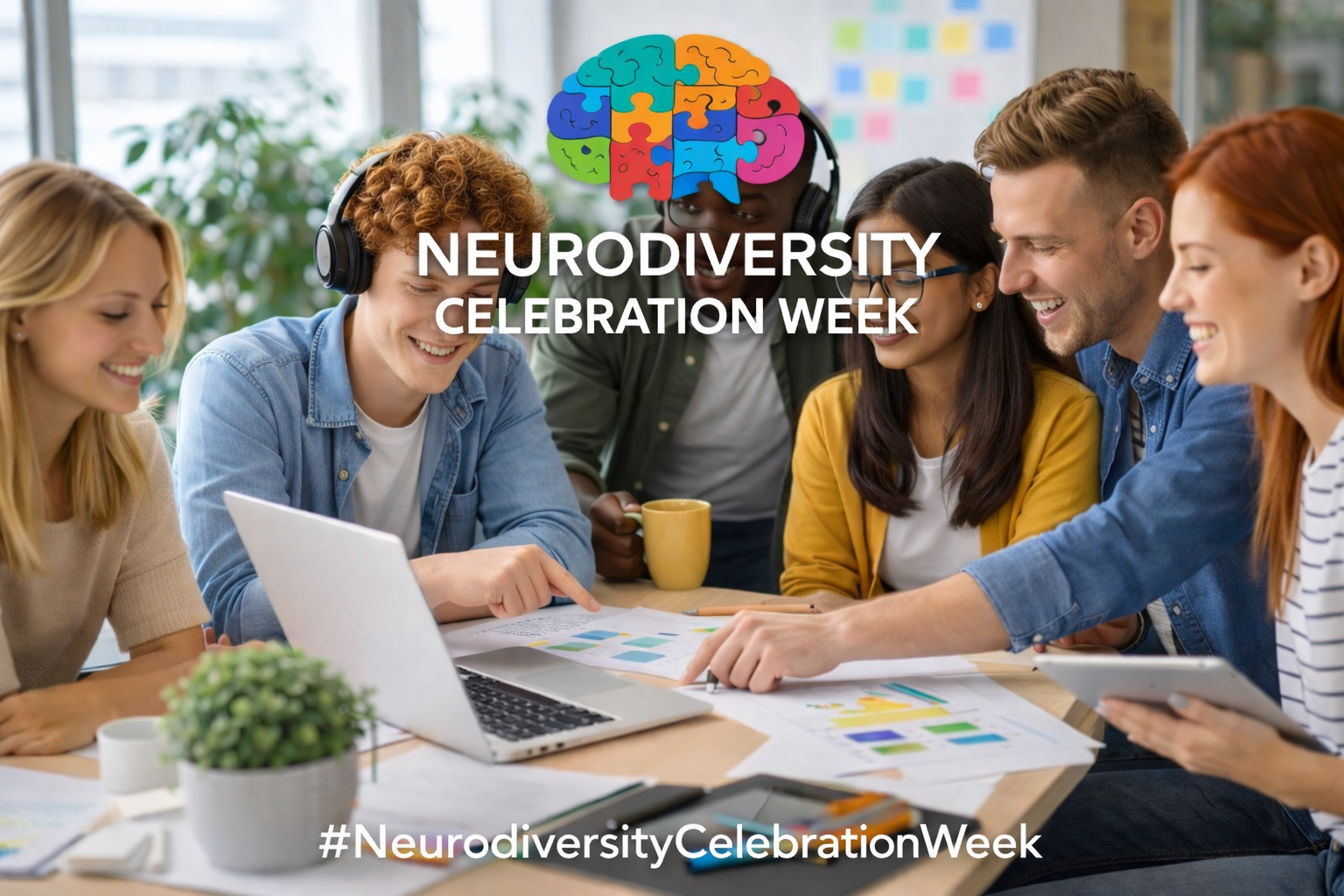
This week is Neurodiversity Celebration Week — and it’s an important reminder that there is no single “right” way to think, work, or communicate.

Neurodiversity isn’t a challenge to be managed.
It’s a strength to be understood, supported, and unlocked.

Across businesses, we’re seeing a shift — from awareness to action.

Because when organisations create environments where neurodivergent individuals can thrive, they don’t just become more inclusive…
They become more innovative, more creative, and more effective.

Different thinking drives better problem-solving
Diverse perspectives challenge the status quo
Inclusive cultures outperform homogeneous ones

But inclusion isn’t about statements — it’s about systems.

Are hiring processes accessible?
Are managers equipped to support different working styles?
Are environments designed for flexibility, not conformity?

At Intersect Global, we believe real progress happens at the intersection of people, performance, and purpose.

This week is a chance to reflect — but more importantly, to act.

Because celebrating neurodiversity isn’t just the right thing to do.
It’s a smarter way to build better businesses.

#NeurodiversityCelebrationWeek #Inclusion #DiversityAndInclusion #Leadership #FutureOfWork #PeopleStrategy

Intersect Global | Global Recycling Day 2026Turning Waste into Opportunity: Why Recycling Is a Strategic Imperative

Today, on Global Recycling Day, businesses, governments, and communities around the world are reminded of a simple but powerful truth: waste is not the end of a product’s life—it’s the beginning of a new one.

At Intersect Global, we see recycling not just as an environmental necessity, but as a strategic lever for innovation, resilience, and long-term growth.


The Shift from Waste to Resource

For decades, the global economy has largely operated on a linear model: take, make, dispose. This approach is no longer sustainable in a world facing resource scarcity, climate pressure, and growing consumer expectations.

Recycling sits at the heart of the transition to a circular economy—one where materials are continuously reused, repurposed, and reintegrated into supply chains. This shift reduces dependency on virgin resources, lowers emissions, and unlocks new economic value.


Why Recycling Matters More Than Ever

1. Environmental Impact

Recycling significantly reduces landfill use, conserves natural resources, and cuts greenhouse gas emissions. For example, recycling aluminium saves up to 95% of the energy required to produce it from raw materials.

2. Economic Opportunity

Recycling is not just a cost centre—it’s a growth engine. Secondary materials markets are expanding rapidly, creating jobs, stimulating innovation, and driving new business models.

3. Regulatory Pressure

Governments worldwide are tightening regulations around waste, packaging, and emissions. Businesses that proactively embed recycling into their operations will be better positioned to comply—and to lead.

4. Consumer Expectations

Today’s consumers are increasingly conscious of sustainability. Brands that demonstrate genuine commitment to recycling and circular practices build stronger trust and loyalty.


The Role of Businesses: From Compliance to Leadership

Forward-thinking organisations are moving beyond basic recycling compliance and embedding circularity into their core strategy. This includes:

  • Designing products for recyclability from the outset
  • Reducing material complexity in packaging
  • Partnering with recycling and recovery networks
  • Leveraging data to track material flows and waste reduction

At Intersect Global, we work with organisations to identify where sustainability intersects with commercial value—helping transform recycling from a checkbox into a competitive advantage.


Challenges to Overcome

Despite progress, significant barriers remain:

  • Infrastructure gaps in collection and processing
  • Inconsistent global standards for materials and recycling systems
  • Low-quality recyclates due to contamination
  • Lack of transparency across supply chains

Addressing these challenges requires collaboration across industries, investment in technology, and alignment between policy and practice.


A Call to Action

Global Recycling Day is not just about awareness—it’s about action.

For businesses, the question is no longer whether to prioritise recycling, but how quickly it can be embedded into operations, strategy, and culture.

For leaders, it’s an opportunity to rethink systems, challenge assumptions, and invest in solutions that deliver both environmental and economic returns.


Looking Ahead

The future belongs to organisations that can turn sustainability into strategy. Recycling is one of the most tangible—and impactful—places to start.

At Intersect Global, we believe that the intersection of sustainability, innovation, and business performance is where real transformation happens.

Today, we celebrate recycling. Tomorrow, we build around it.

World Cancer Day: Together, We Build More Than Infrastructure

4th February – World Cancer Day

At Intersect Global, we spend our days connecting people to projects — building infrastructure, strengthening teams, and supporting growth across the construction and engineering sectors.

But today, on World Cancer Day, we pause to recognise something far bigger than work.

Cancer affects millions of people worldwide. It impacts families, friends, colleagues and communities — often quietly and unexpectedly. Behind every statistic is a human story: resilience, courage, fear, hope, and determination.

The Reality in Our Industry

Construction and engineering are industries built on strength and resilience. Yet statistically, men working in construction face some of the highest cancer risks in the UK, particularly from occupational exposures and lifestyle-related factors.

Long hours, high-pressure environments, and “just get on with it” cultures can mean symptoms are ignored and health checks are delayed.

World Cancer Day reminds us that:

  • Early detection saves lives
  • Talking openly reduces stigma
  • Looking after your health is not weakness — it’s responsibility

It’s Personal for Many

Most of us have been touched by cancer in some way. A parent. A partner. A colleague. A friend.

When someone we care about is diagnosed, priorities shift instantly. Deadlines, targets and programmes suddenly feel small in comparison.

That perspective matters.

What Can We Do?

At Intersect Global, we believe businesses have a role to play beyond commercial success.

We can:

  • Encourage regular health checks and screenings
  • Promote supportive workplace cultures
  • Allow space for vulnerability
  • Support charities and fundraising efforts
  • Show empathy when people are navigating treatment or caring responsibilities

Sometimes, simply asking “How are you, really?” can make more difference than we realise.

Supporting Each Other

Infrastructure is built on strong foundations. So are teams.

Let’s create environments where people feel safe to:

  • Speak up about their health
  • Take time off when they need it
  • Support colleagues through difficult periods

Because strength isn’t just physical. It’s emotional. It’s communal.

A Reminder Today

If you’ve been putting off a GP appointment — book it.
If someone close to you is going through treatment — send that message.
If you’re struggling — talk to someone.

World Cancer Day is about awareness, but also about action.

At Intersect Global, we are proud to stand with those fighting, those surviving, those grieving, and those supporting.

Together, we build more than projects.
We build people. We build community.

And today, we build awareness.


Intersect Global